

Former UNHRC commissioner Pillay urges renewed global action on women’s rights
Former United Nations High Commissioner for Human Rights Navi Pillay has called for stronger global action to advance women’s rights, warning that millions of women and girls are still denied basic freedoms despite decades of international commitments.
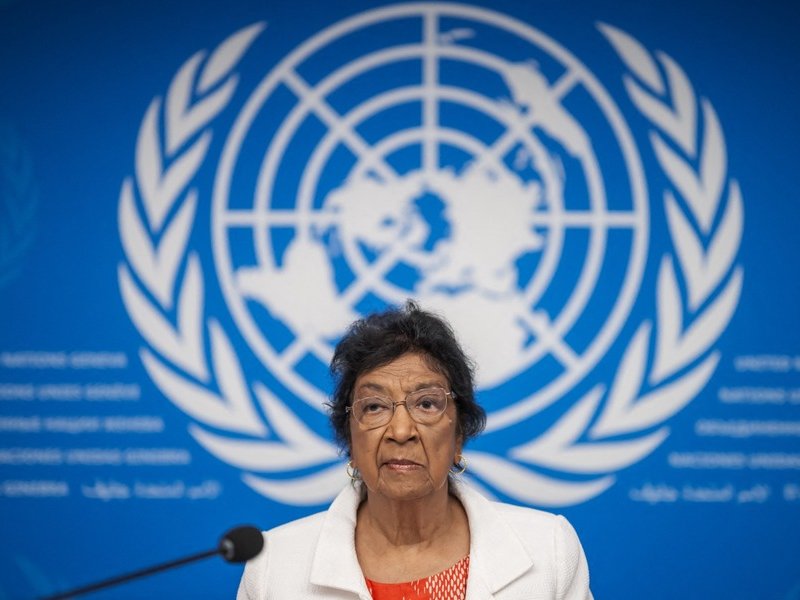
Pillay delivered the keynote address at the 51st anniversary celebration of International Women's Day hosted by the University of South Africa on Monday.
Speaking to students, academics, and activists, Pillay said her career in international law and human rights had exposed both the harsh realities faced by women and the resilience of those fighting for justice.
"I speak to you as someone who has sat across from survivors of violence in wars and conflicts, and also women violated in homes and workplaces.
"I have listened to girls denied education and met women imprisoned for defending freedom. Through all of this, I have seen both the fragility and the resilience of human rights."
Pillay said global frameworks such as the Universal Declaration of Human Rights and the Convention on the Elimination of All Forms of Discrimination Against Women established clear protections for women, but implementation remains inconsistent across the world.
"Nearly eight decades after the Universal Declaration of Human Rights proclaimed that all human beings are born free and equal in dignity and rights, women and girls are still fighting to claim what was already promised to them."
She described gender-based violence as one of the most pervasive human rights violations globally, noting that women continue to face abuse ranging from domestic violence and trafficking to child marriage and femicide.
"From domestic abuse to trafficking, from child marriage to femicide, women’s bodies are still battlegrounds for power and control."
Reflecting on her work as a judge at the International Criminal Tribunal for Rwanda, Pillay recalled the landmark 1997 judgment that recognised rape and sexual violence in conflict as crimes under international law.
"For centuries, women’s pain in wars and conflicts had been ignored or dismissed, in that courtroom in Arusha, the survivors’ voices changed the law, and for the first time, rape and sexual violence in conflict were recognised as crimes."
Pillay also highlighted the need for greater accountability in addressing gender-based violence, saying justice requires governments to enforce laws and prosecute perpetrators.
"Justice means accountability. It means prosecuting gender-based violence, ending child marriage, protecting women human rights defenders, and dismantling discriminatory laws."
Despite progress in some areas, Pillay warned that advancing women’s rights requires stronger political commitment from governments.
"We do not lack declarations, frameworks, or evidence; what we often lack is sustained political will."
She added that achieving equality requires structural change, including laws that protect women, budgets that prioritise gender equality, and courts that enforce human rights.
Pillay also praised South Africa’s democratic institutions and the role women have played in shaping social change since the end of apartheid. However, she said the country still has work to do in ensuring greater representation of women in leadership and decision-making positions.
She urged young people and civil society to continue advocating for gender equality, saying progress depends on sustained action rather than rhetoric.
"Women’s rights are not a favour, they are not charity, they are human rights."
ALSO READ
