

Ramaphosa urges BRICS countries to 'responsibly' harness power of AI
President Cyril Ramaphosa has called on BRICS countries to strengthen cooperation on climate change, artificial intelligence and sustainable development, saying developing economies must be better equipped to withstand future global shocks.
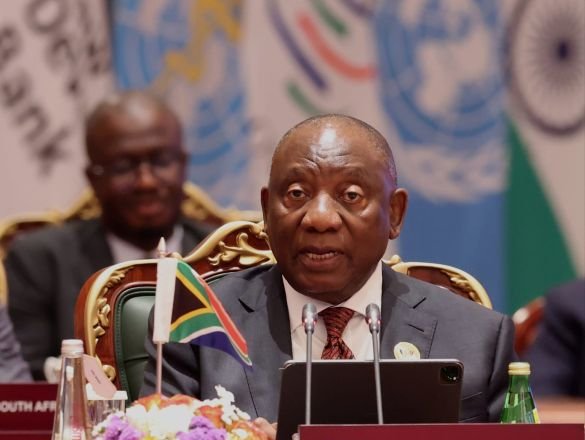
Speaking at the BRICS Leaders’ Summit in India on Sunday, Ramaphosa said climate-related disaster risks should be incorporated into economic policymaking, climate financing and infrastructure development.
He stressed that developing countries need fair access to technology, funding and skills to build resilience.
According to Ramaphosa, the transition to cleaner energy should not leave workers and communities behind, but should instead focus on reskilling workers, protecting livelihoods and creating quality jobs.
He also called for greater transparency in the markets for critical minerals and clean-energy technologies, saying supply chains must become more diversified and responsible.
The president placed particular emphasis on Africa’s mineral wealth, arguing that the continent should benefit more directly from the resources extracted from its soil adding that value addition and mineral beneficiation should take place closer to the source of extraction in order to support inclusive economic growth in Africa and other developing regions.
This approach, he argued, could help African economies move beyond simply exporting raw materials and instead develop industries, skills and jobs around their natural resources.
Artificial intelligence was another major focus of Ramaphosa’s address withe the president noting that AI systems are becoming increasingly powerful and are already reshaping many aspects of economic and social life.
Ramaphosa said AI could bring significant benefits if it is developed and used responsibly, with the potential to transform sectors such as healthcare, education, agriculture and scientific research.
He said AI could support efforts to tackle inequality, poverty and underdevelopment, while contributing to greater productivity and human progress.
However, Ramaphosa warned that the rapid development of AI also comes with serious risks pointing out concerns raised by developers of advanced AI systems about potential misuse, including cyber operations, biological threats, mass surveillance, manipulation and disruption to employment.
Ramaphosa also backed calls from within the technology industry for stronger external oversight of powerful AI systems.
He referred to Anthropic CEO Dario Amodei and his support for formal checks, audits and government oversight of AI companies arguing that such regulation is already common in industries where public safety is at stake, including aviation, pharmaceuticals, nuclear energy and financial services.
He warned that humanity should not allow technology to advance beyond its ability to understand and control it.
“We must never reach a situation where technological capability has moved beyond our capacity to understand it, supervise it and control it.”
Against this backdrop, Ramaphosa said South Africa wants BRICS to establish an international mechanism capable of independently evaluating AI systems scientifically.
The proposed mechanism would include meaningful human control, mandatory reporting of serious AI-related incidents and stronger safeguards as AI capabilities increase.
ALSO READ
