

State of emergency declared as bushfires rage in Australia
A state of emergency was declared in Australia's most populated region on Thursday, as a record heat wave fanned unprecedented bushfires.
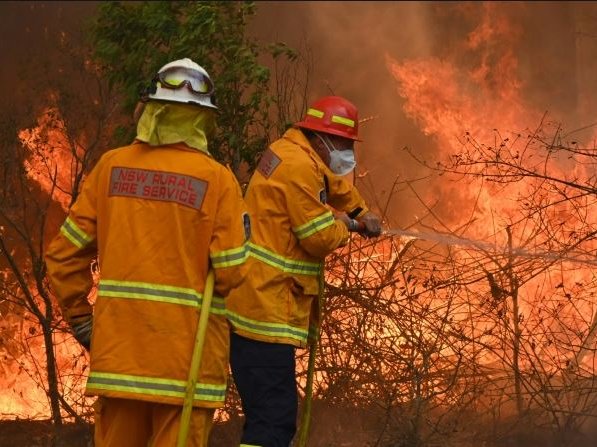
About 100 fires have been burning for weeks in drought-plagued New South Wales (NSW) with half of them uncontained, including a "mega-blaze" ringing Sydney, covering Australia's biggest city in a haze of toxic smoke.
NSW Premier Gladys Berejiklian said the seven-day state of emergency, the second declared in the state since the bushfire season began early in September, was due to "catastrophic weather conditions".
Temperatures are expected to near 50 degrees celsius (122 Fahrenheit) in South Australia and peak at 45 degrees in the western suburbs of Sydney, while turbulent winds of up to 100 kilometres (60 miles) are expected to fan bushfires burning ever-closer to the city.
The country experienced its hottest day on record Tuesday, with the average nationwide temperatures reaching 40.9 degrees Celsius (105.6 degrees Fahrenheit), which is expected to be surpassed as an intensifying heat wave spreads across the country.
The heatwave is another alarm bell about global warming in Australia, where this year's early and intense start to summer bushfires has heaped pressure on the government to do more to tackle climate change.
A statewide Total Fire Ban is now in effect through until midnight Saturday 21st December 2019, due to hot and dry conditions across NSW. If you see an unattended fire please call Triple Zero immediately (000). #NSWRFS pic.twitter.com/Ar9w17SgTT
— NSW RFS (@NSWRFS) December 17, 2019
Temperatures are expected to near 50 degrees celsius (122 Fahrenheit) in South Australia and peak at 45 degrees in the western suburbs of Sydney, while turbulent winds of up to 100 kilometres (60 miles) are expected to fan bushfires burning ever-closer to the city.
The country experienced its hottest day on record Tuesday, with the average nationwide temperatures reaching 40.9 degrees Celsius (105.6 degrees Fahrenheit), which is expected to be surpassed as an intensifying heat wave spreads across the country.
The heatwave is another alarm bell about global warming in Australia, where this year's early and intense start to summer bushfires has heaped pressure on the government to do more to tackle climate change.
ALSO READ:
Australia beats hottest day record by full degree
The Bureau of Meteorology said the new nationally averaged maximum was reached Wednesday, topping the 40.9 degrees hit Tuesday, which beat the previous record of 40.3 C in January 2013. The heatwave has exacerbated an unprecedented, drought-fueled series of bushfires ravaging large areas of Australia.
There were 2,000 firefighters battling the blazes Thursday, with the support of small US and Canadian teams, as well as Australia Defence Force personnel.
New South Wales Rural Fire Service commissioner Shane Fitzsimmons said five 100-person "strike teams" were on standby to deploy to the most dangerous fires give the "enormity of some of these fire complexities and the severity of the forecast weather conditions".
"The worst of the fire weather conditions, the extreme fire danger ratings we are expecting today, are centred around the greater Sydney environment," he added.
At Buxton, about 100 kilometres (62 miles) southwest of Sydney, longtime resident Paul Collins said a nearby bushfire that had destroyed properties was "much worse" than in past years.
"It's spread faster with the wind, and the bush and the ground is just so dry," he told AFP, blaming climate change and the drought for the worsening fires.
"It's just a horrendous situation, really."
The fires have sparked climate protests targeting the conservative government, which has resisted pressure to address the root causes of global warming in order to protect the country's lucrative coal export industry.
On Thursday climate protesters marched on Prime Minister Scott Morrison's official residence in Sydney to demand curbs on greenhouse gas emissions and highlight his absence on an overseas holiday as large parts of the country burn.
- 'Dangerous and disastrous' heat -
The extreme weather is causing major health concerns, with leading doctors this week labelling the smoke haze that has shrouded Sydney for weeks a "public health emergency".
Hospitals have been recording large increases in emergency room visits for respiratory problems, including a dramatic 80 percent spike when air quality plummeted on December 10, while emergency ambulance call-outs were up 10 percent in the past week alone.
New South Wales health officials are urging vulnerable people -- particularly the elderly and those suffering chronic conditions -- to stay indoors amid worries the scorching heat combined with toxic bushfire smoke could cause "severe illness, hospital admissions and even death".
Bureau of Meteorology forecaster Dean Narramore said the "dangerous and disastrous" heat wave was toppling dozens of "extraordinary" records across the country.
"We're heading into a fifth or sixth day in a row where multiple places broke a record. And we're likely to see 30 or 40 records around the country break," he told national broadcaster ABC.
More than 70 fires are raging across Queensland state to the north of NSW, including one at Peregian, near the coastal tourist hub of Noosa, that forced people to flee their homes Wednesday.
Bushfires are also burning in Western Australia and South Australia, where the mercury is hitting the mid to high-40s in many areas.
At least three million hectares (7.4 million acres) of land has been torched across Australia in recent months, with six people killed and more than 800 homes destroyed.
Scientists say the blazes have come earlier and with more intensity than usual due to global warming and a prolonged drought that has left the land tinder dry and many towns running out of water.
EMERGENCY WARNING: Gospers Mountain fire.
— NSW RFS (@NSWRFS) December 15, 2019
Fire continues to burn in the areas of Mount Wilson, Mount Irvine, Mount Tomah, Berambing and Bilpin. Residents in these areas, it is too late to leave. Seek shelter as the fire approaches. Protect yourself from the heat of fire. #nswrfs pic.twitter.com/LVe7xlAJkW