

Research reveals how group dinners negatively affect eating habits
Going out to dinner with 12 friends might sound fun, but it might not be ideal...
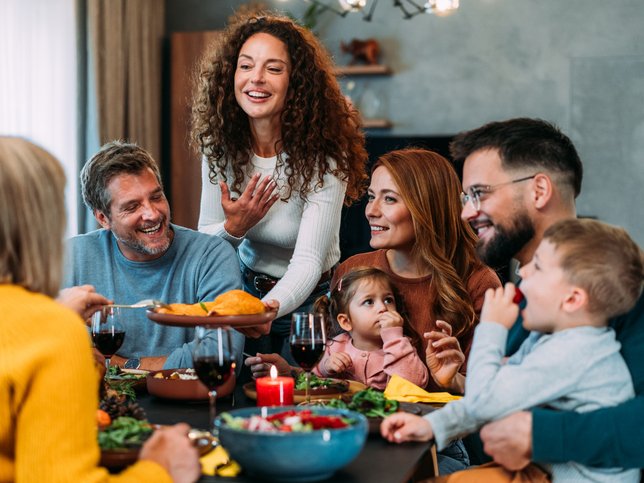
There's always that one person who thinks it's a good idea to invite 20 people to a dinner party.
READ: Walmart announces location of first SA store
While it may seem like the best plan if you want all your friends or family to attend, there are a few issues to consider.
Depending on the setup, in a large group around a table, you will never get to talk and hang out with all the people you want to.
Along the table, conversations will be split up, and smaller groups will form.
READ: Gauteng reacts to employees going barefoot at work
This setup might only be ideal if you have guests who are attending but need to be kept apart from each other.
It's not as sociable as it sounds, and having a meal with a big group doesn't just affect your conversation.
It also affects how much you eat!
READ: Meet the ladies of 'The Real Housewives Ultimate Girls Trip: Africa'
Research has shown that the size of a social group can influence various aspects, including the amount of food consumed.
A study by the Department of Psychology, Oklahoma State University, has explained how the growing group size plays a role in conversation: "It is genuinely difficult to sustain a casual conversation that includes more than four speakers. Add a fifth speaker, and the conversation often quickly fissions into smaller groups. Termed ‘the dinner party problem,’ this four-person conversation size limit is believed to be caused by evolved cognitive constraints on human mentalizing capacities."
READ: SA motorists warned against new 'Ghost Fines' scam
How does food play into this?
For over four decades, people have been researching the social facilitation of eating.
READ: Study reveals how satisfied South Africans are with their love life
The social facilitation of eating refers to the increase in food intake that occurs when people eat together compared to when they eat alone.
According to C. Peter Herman, a professor at the University of Toronto:
- People tend to eat more when eating in groups.
- People eat increasingly more as group size increases, up to a point.
- Impression-management concerns suppress group intake among strangers.
- Group size appears to dictate how much food (per capita) is served initially.
READ: Domestic Partnership Bill warning for unmarried South African couples
But why do we eat more when we are part of a bigger group?
It turns out that when people eat in groups, more food is available to each of them, on average. It's suggested that people arrange for more food to be available when planning to eat in a group, as eating in a group - especially with friends - allows people to eat more than they would ordinarily.
LOOK: Inside record-breaking R60-million Cape Town manor sale
One of the greatest pleasures of a big Christmas lunch or dinner party with friends is the overindulgence of it all.
Listen to the podcast below to learn more and find out the perfect group size:
Tune in to 'The Drive with Rob & Roz', on weekdays from 16:00 – 19:00. Stream the show live here or download our mobile app here.
Listen to Jacaranda FM:
- 94.2
- Jacaranda FM App
- http://jacarandafm.com
- DStv 858/ OpenView 602
Follow us on social media:
Image: Getty Images